















Someone who fills in your Facebook lead form is ready to hear from you right now, not next week. If your autoresponders live in GetResponse, the lead needs to be on your list the moment they submit. Sending Facebook leads to GetResponse means your first email lands while they still remember your ad.
This guide shows how to send Facebook lead ads to GetResponse step by step, in about three minutes, with each lead on the right list, tagged and with your fields filled in. Then it compares Zapier and CSV imports, so you can pick what fits.
GetResponse has no built-in Facebook Lead Ads integration, so you connect the two with a lead delivery tool. In LeadSender: connect Facebook, choose Facebook Leads to GetResponse, pick your Page and form, paste a GetResponse API key, pick a list and tags, match your fields, send a test lead and turn it on. Every new lead then joins your list within seconds, and your autoresponder starts.
How to send Facebook leads to GetResponse with LeadSender
This is the quickest way to connect Facebook lead ads to GetResponse: no Zap to maintain, a new contact in seconds, and an email if a lead ever fails to arrive.
Start a free trial and connect Facebook
Start your 7-day free trial of LeadSender (no card needed) and sign in with the Facebook account that manages your Page. That lets LeadSender hear about each new lead the moment it's submitted.
Choose the GetResponse template
From Integrations, pick Facebook Leads to GetResponse. Then select your Facebook Page and the lead form to send.
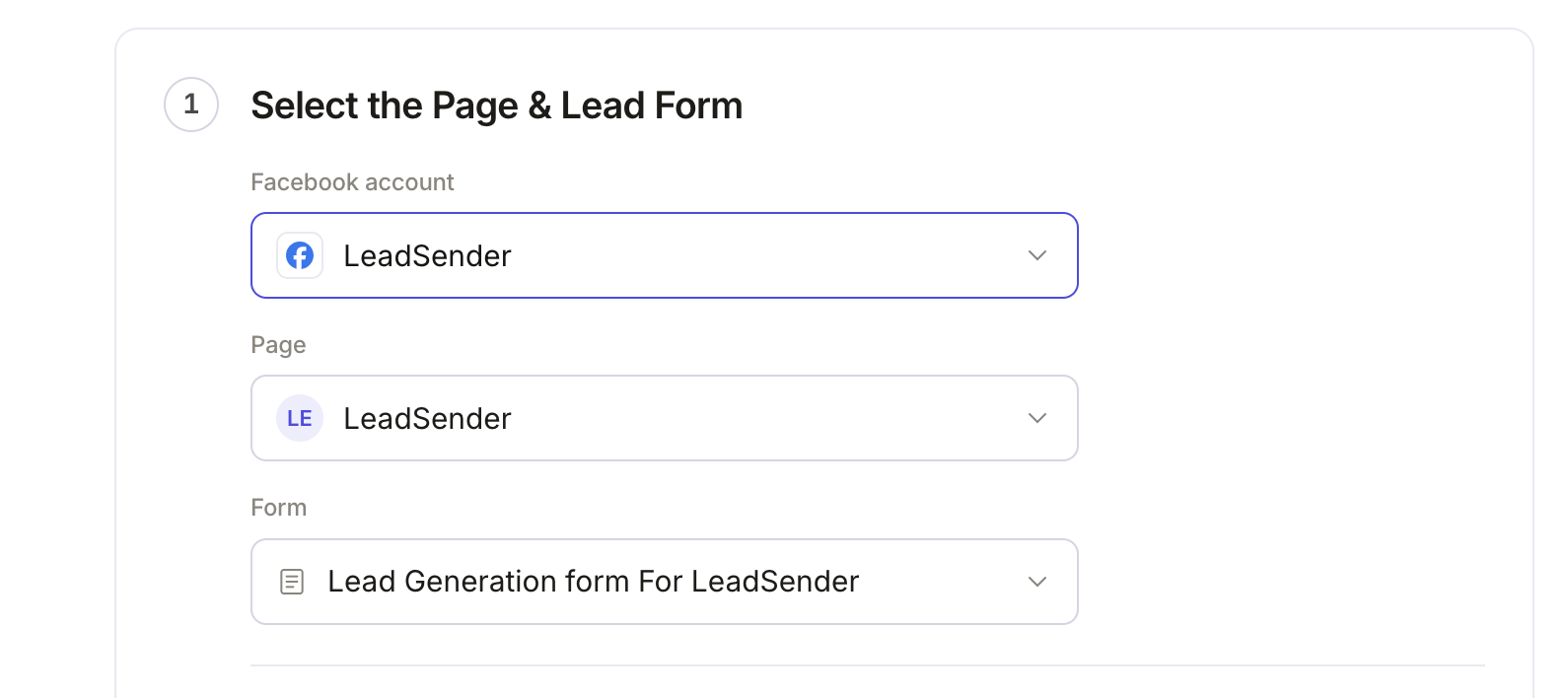 Select your Page
and lead form
Connect GetResponse with an API key
In the builder's Select or connect GetResponse step, click Connect.
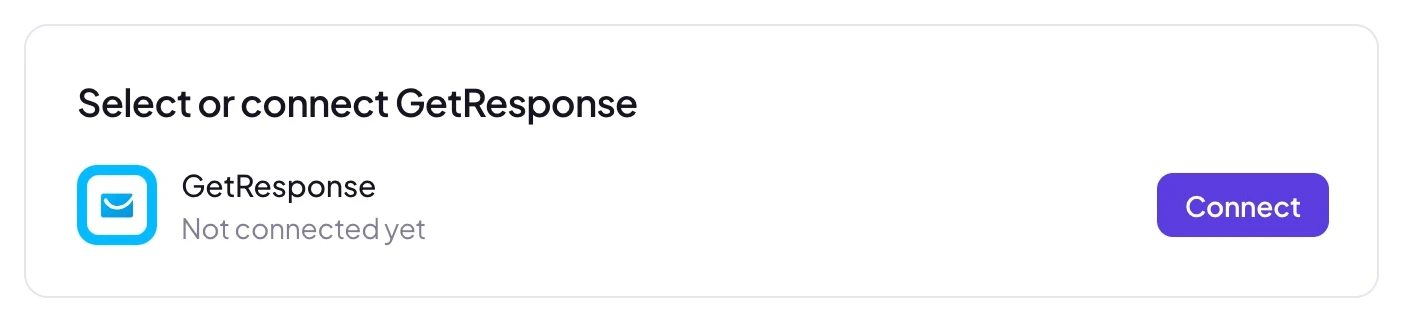 Click Connect
In another tab, open GetResponse and go to Tools, then Integrations and API, then API. Click Generate API key, name it LeadSender and copy the key. Paste it into LeadSender and click Connect. LeadSender checks the key with GetResponse before saving it, and keeps it on its servers.
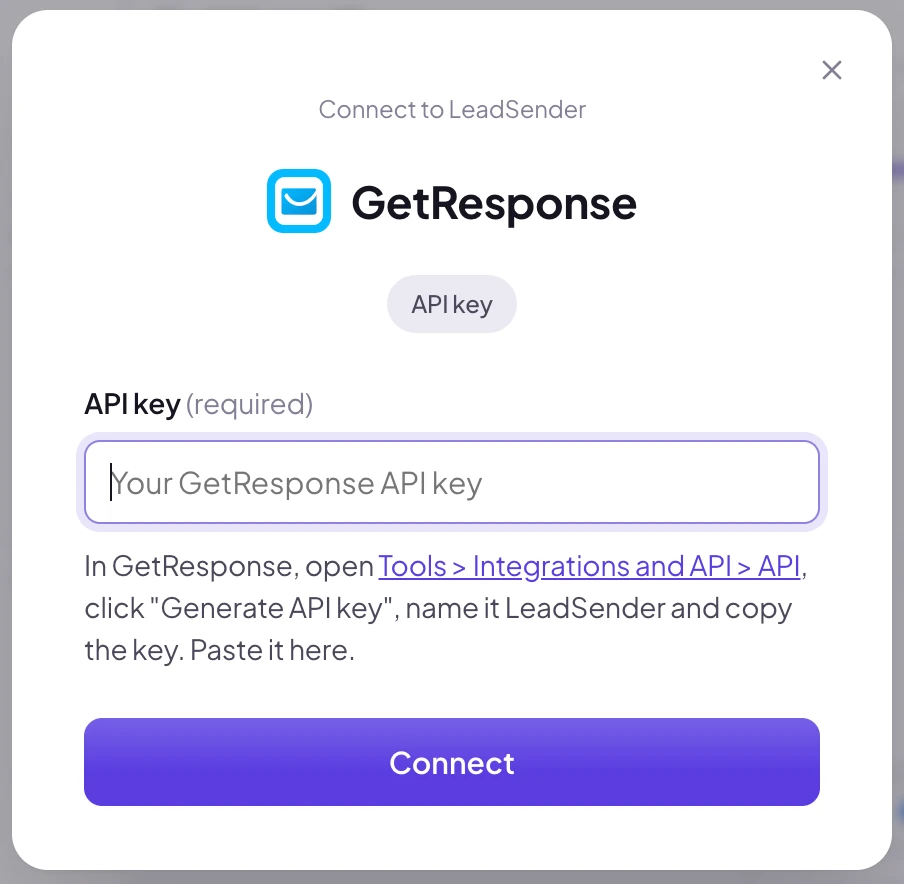 Paste your API key
Pick a list and tags
Once connected, choose the list in Add new contacts to this list. It starts on your default list. Then open Tags to apply and pick any tags, like FBLeads, or type a new one to create it. Lists and tags are read live from your account; made a new one in GetResponse? Click Refresh fields.
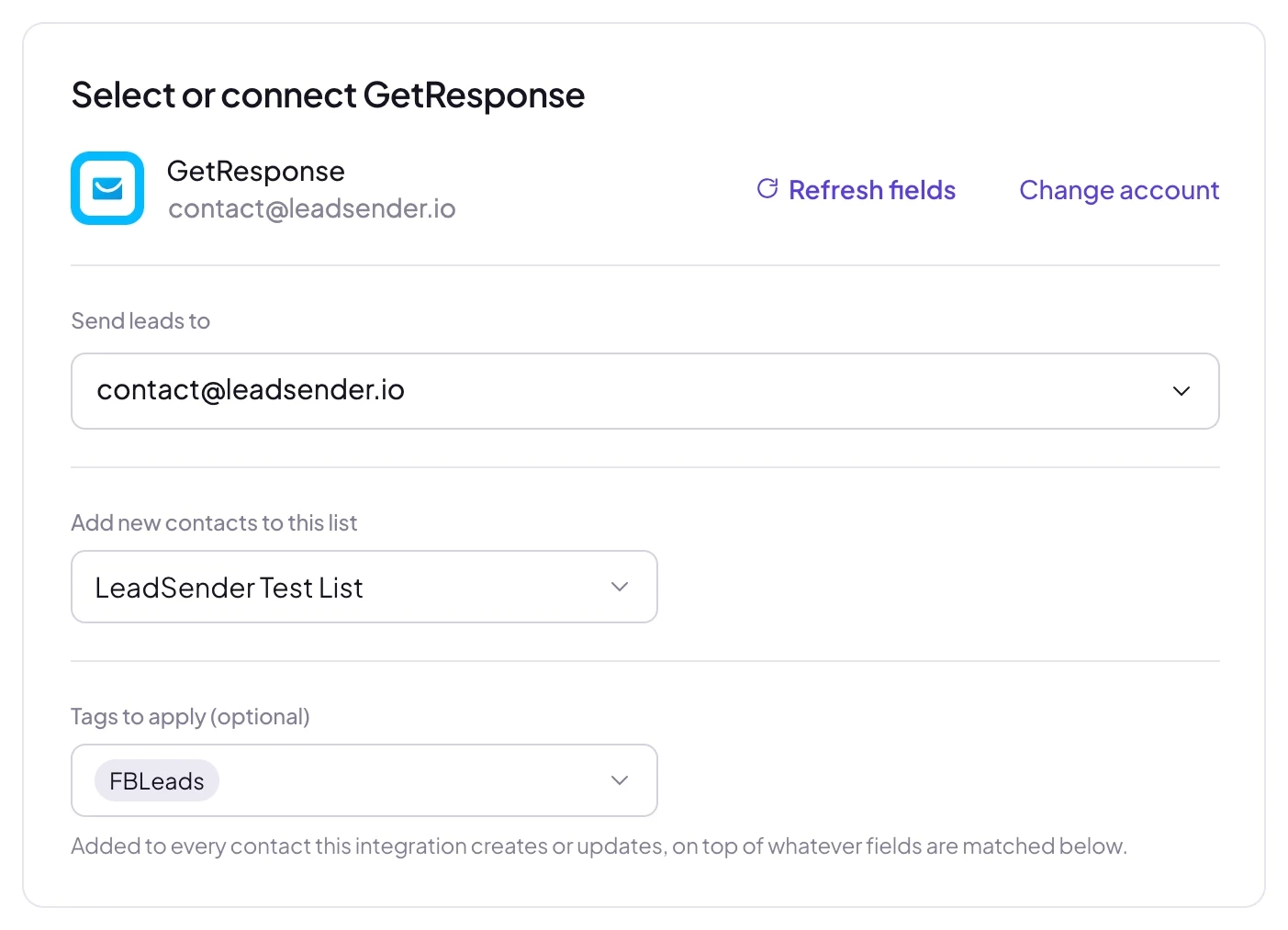 Pick the listAdd tags (optional)New list or tag? Refresh
Match your fields
In Match your fields, GetResponse's Name and Email come first, then every custom field in your account. Email and phone are matched for you. For any other field, click Match a field and pick the form answer that belongs there.
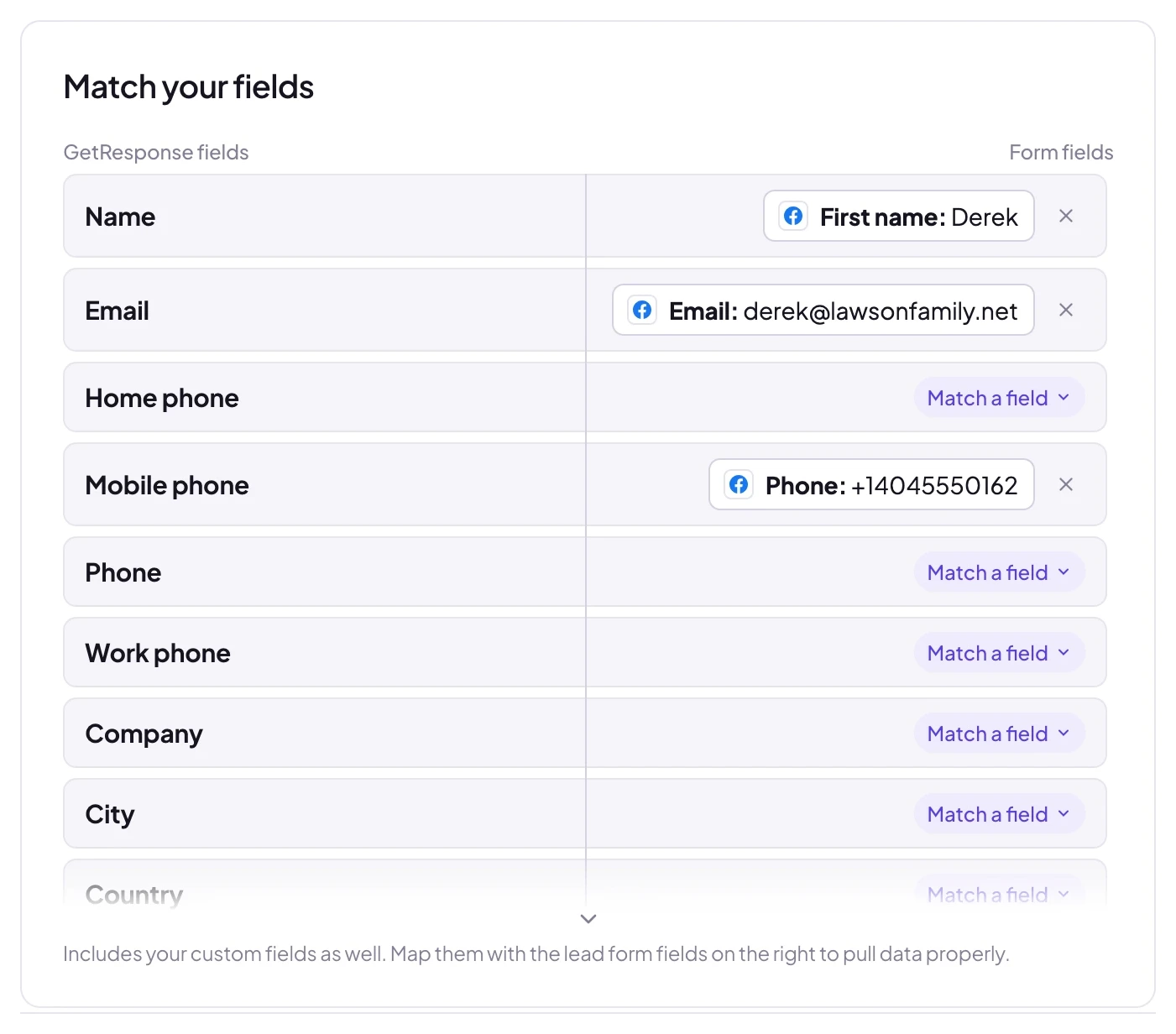 Match any other field
Send a test lead and turn it on
Click Send a test lead. LeadSender adds your latest real lead to GetResponse and shows exactly what was sent. Want a brand new lead instead? Create one with our free Meta Lead Ads Testing Tool.
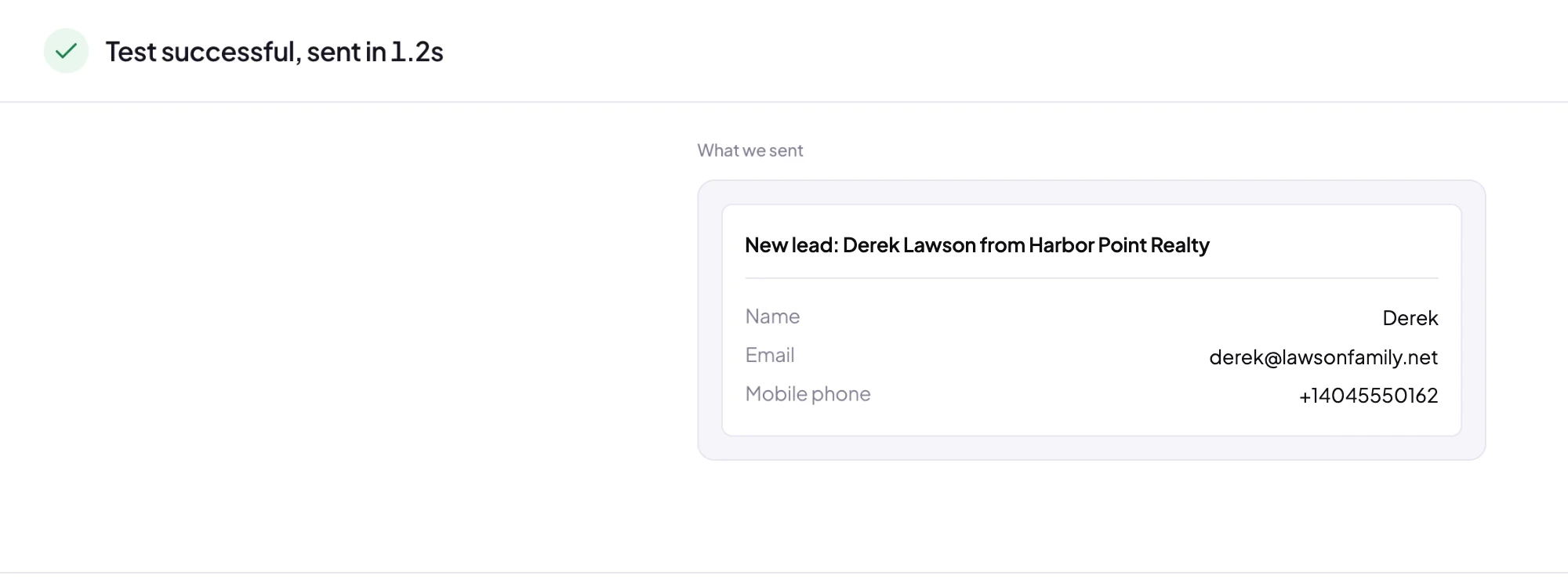 Exactly what was sent to GetResponse
Open Contacts in GetResponse and search the list: the lead is already there, added by API at autoresponder day 0. When it looks right, click Turn on. From then on every new lead from that form, on Facebook or Instagram, is added within seconds.
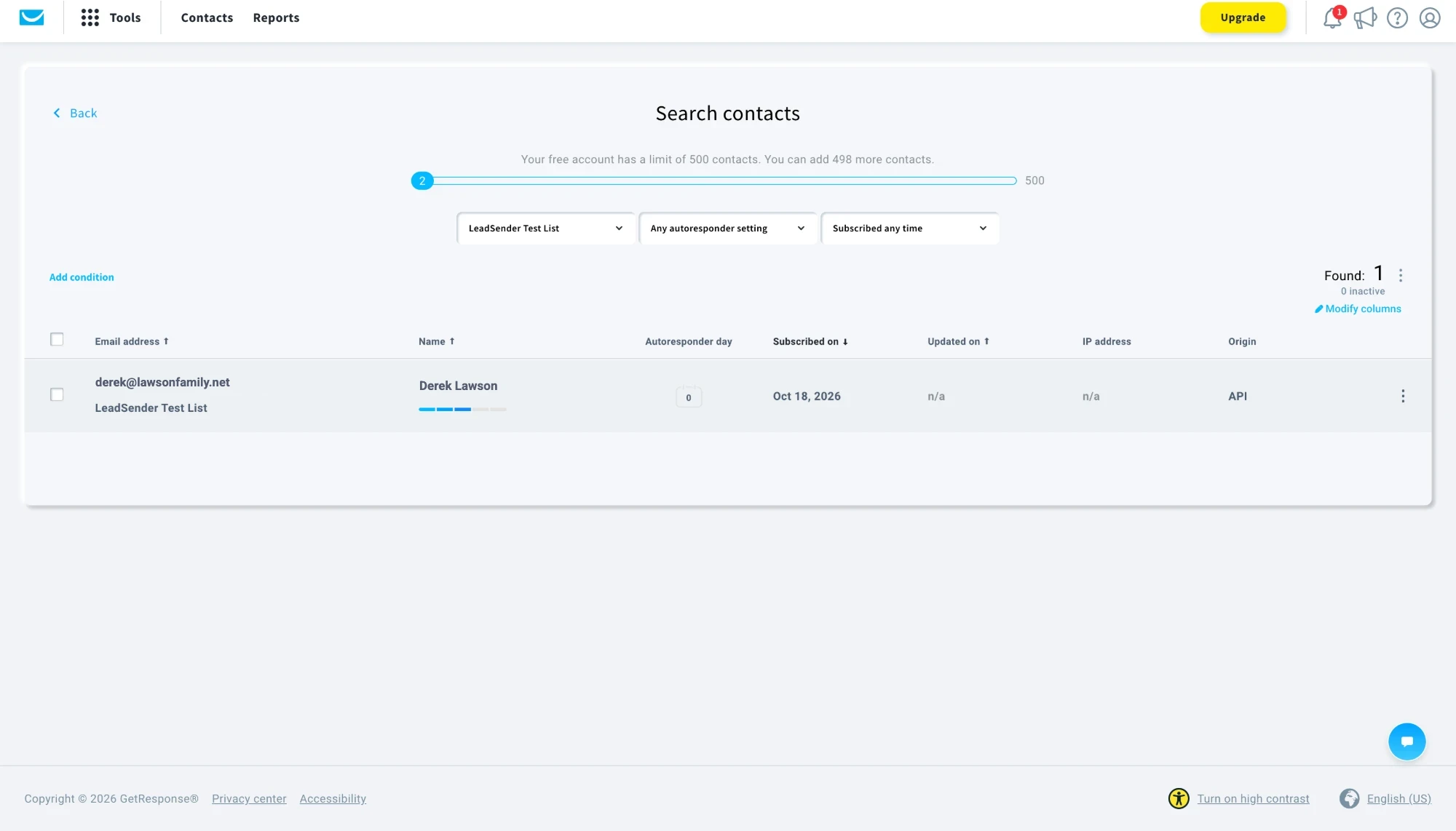 Your Facebook lead, on your list
Start your GetResponse autoresponder for every lead
Getting the lead into GetResponse is step one. The real win is the email that goes out by itself a minute later. There are two ways to set that up:
- Autoresponders on the list. Contacts from LeadSender join at day 0 of the cycle, so a day 0 message on the list you picked goes out straight away, and the rest follow on schedule.
- An automation started by a tag. Pick a tag in LeadSender, like
FBLeads, then in GetResponse build an automation that starts when that tag is assigned.
Running a buyer ad and a seller ad? Create one integration per form with a different tag on each. Every lead then gets the emails written for the offer they actually asked about.
How your Facebook answers fill GetResponse fields
Email is the one detail GetResponse needs to add a contact, so every form you send should ask for it. The rest of the answers go into fields:
- Name is GetResponse's single name field. If your form asks first and last name separately, the full name is sent.
- Phone, city, company and country are GetResponse's built-in custom fields, ready to match. Phone numbers need the country code, like +1, which Facebook usually includes.
- Your own custom fields, like
budgetormove_date, are listed too. Dropdown and checkbox fields only take one of their options, so a different answer is left out instead of blocking the lead. - Repeat leads update the same contact with the new answers and tags.
Agencies can connect several GetResponse accounts and switch with Change account. Each one is named by its account email and shows on the Destinations page.
LeadSender vs Zapier vs CSV import for GetResponse
GetResponse has no built-in way to receive Facebook lead ads, so the real choice is a dedicated tool, a general automation platform, or importing by hand:
| LeadSender | Zapier | CSV import | |
|---|---|---|---|
| Price | From $9.99/mo, 7-day free trial | From $29.99/mo (Facebook Lead Ads is a premium app) | Free |
| Speed | ✓ Seconds | Depends on plan | ✗ Whenever you import |
| Setup | ✓ About 3 minutes, guided | ⚠ Build and test a Zap yourself | ⚠ Download, clean and upload every time |
| Lists, tags and custom fields | ✓ Read live from your account | ✓ Mapped by hand | ⚠ Columns matched on each import |
| Autoresponder starts instantly | ✓ Day 0, automatically | ⚠ If you set the cycle day | ✗ Days late |
| Failed deliveries | ✓ Email alert, reason shown, one-click resend | Zap history | None |
Short version: Zapier works if you already pay for it and don't mind building the Zap. CSV imports cost nothing but leave every lead waiting. If you want each lead in GetResponse within seconds without maintaining anything, use LeadSender. More in LeadSender vs Zapier.
Using Zapier
With Zapier you create a Zap with Facebook Lead Ads (New Lead) as the trigger and a GetResponse contact action, then map each field. It works, but Facebook Lead Ads is a premium app, so you need a paid Zapier plan, and every lead uses tasks from your allowance.
Importing a CSV
You can download your Facebook leads as a CSV and import it under Contacts, then Add contacts in GetResponse. It's fine for a one-off backfill of older leads, but nobody gets an email until you remember to do it.
When Facebook leads don't reach GetResponse
- “GetResponse rejected this API key”: the key was mistyped, deleted, or expired after 90 days unused. Generate a new one under Tools, Integrations and API, API, and connect again.
- “This lead has no email”: GetResponse needs an email for every contact. Add an email question to your form, or match the email answer to Email.
- Contact not showing yet: GetResponse adds contacts from a queue, which can take a minute. If the list uses double opt-in, the contact appears once they confirm.
- A new list, tag or field is missing: click Refresh fields in the Select or connect GetResponse step.
- Nothing at all: check the integration is turned on, then send a test lead and read the result. Every attempt is listed in Run history with the reason.
Comparing options? See how Facebook lead ads integration works, with the 5 ways to send leads to Email, SMS or your CRM compared.